WHY?PHIL
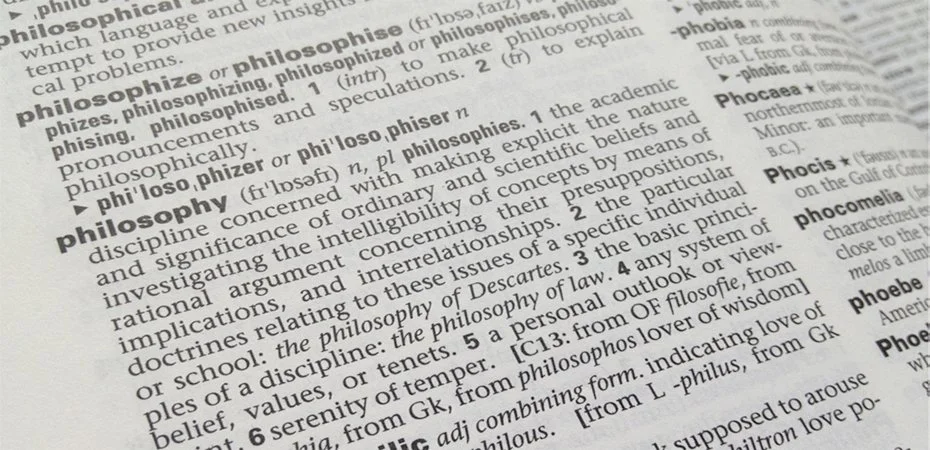
A dictionary definition
Reflections on Reading: The Problems of Philosophy
A person’s first ‘real’ foray in philosophy is something special, and likely the result of a lingering curiosity that in itself develops into a virtue that challenges us and in so makes think. Indeed, philosophy can have very interesting answers to intriguing and even troubling questions of the mind, universe and etc; however, it’s most underrated aspect lies in the way it implicitly grows on to you, how it makes you more critical yet open. Reading philosophy is a mental exercise that lulls thinking and observation into one. Russell’s The problems of philosophy was a rewarding read that leaves me with a peculiar excitement for what’s more. Just like its reading I write this reflection in hopes of knowing that I know less.
How do we know? What can we know? What is Truth?
The first chapter of the book: Appearance and Reality, draws an important distinction that is of great importance to tackle questions of knowledge and truth. Russell notes how there is an important distinction between what appears and what exists. This base revelation, notes how we perceive our knowledge through senses and in doing so introduces knowledges by acquaintance and descriptions, relating how we know some things by direct interactions using sight, smell and other sensory organs, whereas we rely on separate observation and things like written account to know things that we do not or did not have the chance to see or experience, such as the passing of the late Indian Prime minister, Shree Manmohan Singh, we knew of his demise, but through the papers or news, the incident is therefore not sense-datum in the strictest sense for most. Understandably, the ways in which we see or perceive through our senses and the selections of information that make way to us are lacking, we process personally. The sun may shine and blind the eye depending on one’s location or looking angle, but it may also afford a good view depending on circumstance, on the other hand knowledge through descriptions are lacking because we cannot be everywhere and do everything, it is a necessary augment to our limited cognition and perception. There is a strong filter between what exists and may continue to exist and what we perceive, this serves as a helpful reminder of often how subjective truth can be, how coloured and how experiential knowledge may be and most importantly, why we must reserve judgement and understand that there is more to truth than we can ascertain.
Another important kind of knowledge that Russell elucidates considerably is A Priori knowledge; a kind of knowledge that concerns itself directly with the relations of universals or commonly called abstract ideas. His examinations of A Priori knowledge and exploration into philosophers and their contributions towards ascertaining its truth are noteworthy, for instance Russell notes how Immanuel Kant proved that A Priori knowledge is synthetic, that it includes not only the analytic but also the geometric and arithmetic. He makes note of how particulars have always been emphasized in the case of such kind of knowledge but how through lack, there is lesser note on how it actually concerns itself with relations as represented by verbs but has historically been looked at through adjectives. This is important because as the author continues to elucidate on how ideas such as triangularity appear to us in multiple observations without dependence on fresh instances but rather by drawing from a base of A Priori knowledge that makes relations clear. His development on questions of A Priori knowledge sheds light on what we learn and relate through resemblance and is an important discovery in epistemology that moves us closer to what is knowledge by better recognizing the types of knowledge and in the process giving insight into what is known, what can be known and what cannot be known, as discussed later within the philosophical context in the next section.
Limitations and Values of Philosophy: An insight into what to ask and why?
Philosophy is not for the ‘practical man’, it does not pose itself in a way that is really industrious or profit making, either to us or society at large. However, it is this distinction that gives philosophy its true values. Indeed, most of the book and the previous section were really a step to consider how we know lesser than we think and as Russell purports; the more we try to know, the less we end up knowing about what is but the more we can imagine about what can be. Many disciplines such as psychology and astronomy were parts of philosophy but as soon as their definiteness increased and they were brought into a systematic fold, they stopped being philosophy and were sciences unto themselves. Indeed, the guarantees of sciences move it out of philosophy (at least what appears to be knowable around a perceive scientific progress track). Where, philosophy does distinguish itself however from others is through its critical root and defiance of dogmatism. It is important to note though that philosophy also has tendencies that veer it from ‘truth’ or at least the truest that we may know given its indefinite nature. I would say the prime achievement of this philosophical text is through the frame that it sets for students of philosophy, that enables philosophy to be more true to its criticality. One way in which Russell sets about purporting his idea of a valuable philosophy is through an examination into the flaws of his predecessors’ ideas. Indeed, he dismantles Berkely’s idealism by revealing the disjunct between the presence of existence in thoughts and reality, challenges Kant on the guarantee of truth by saying truth is in relation to nature of being and that should being’s nature change then 2+2 may equal 5. He even discards grandiose ideas such as that of the perfect universe and fragmentation as given by Hegel. In doing so, Russell does not mean to shut doors but rather attempts to open more purposeful ones that seek to erase the borders posed by practicality and common sense, to engage in philosophy in a way that embraces the entropy of knowledge collection through an intuitional ask that is always ready to question, but never in distrust; he notes how it is in similar vein to Descartes’s ‘methodological doubt’ and in the end makes it clear that his text if of any true purpose as surmised by him lies not in its self-admitting lack of covering the problems of philosophy but rather on how it serves as an introduction of what to do with philosophy and why to do it, to embrace criticality with fair distinction and to learn more of what is not and be closer to truth while broadening one’s horizons.
A foray unto a foray
At last, I let Russell Speak for himself:
“By organizing our instinctive beliefs and their consequences, by considering which among them is most possible, if necessary, to modify or abandon, we can arrive, on the basis of accepting as our sole data what we instinctively believe, at an orderly systematic organization of our knowledge, in which, though the possibility of error remains, its likelihood is diminished by the interrelation of the parts and by the critical scrutiny which has preceded acquiescence. This function, at least, philosophy can perform.”- Bertrand Russell, The Problems of Philosophy
Link: https://www.gutenberg.org/files/5827/5827-h/5827-h.htm